
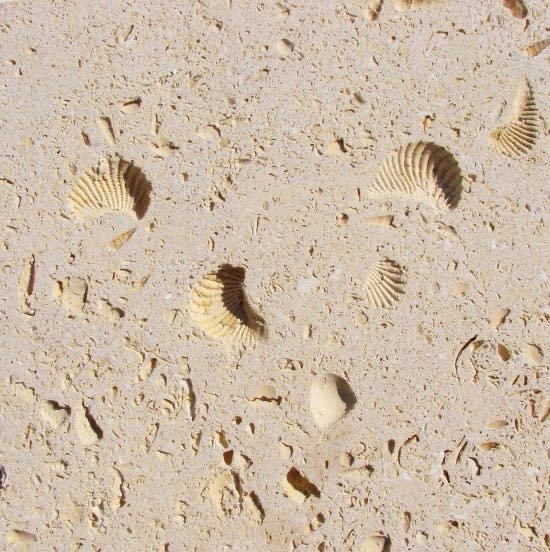
On many high rise buildings around Texas (and as far away as Washington DC) this type of stone cladding has been used. It’s fossilized appearance gives it a very distinctive look. It has been used for decades on schools, museums, office buildings and even the San Jacinto Monument. It is mostly referred to Cordova Fossil Stone (trade-name). It seems to be mostly all quarried out now, with other types of stone taking over.
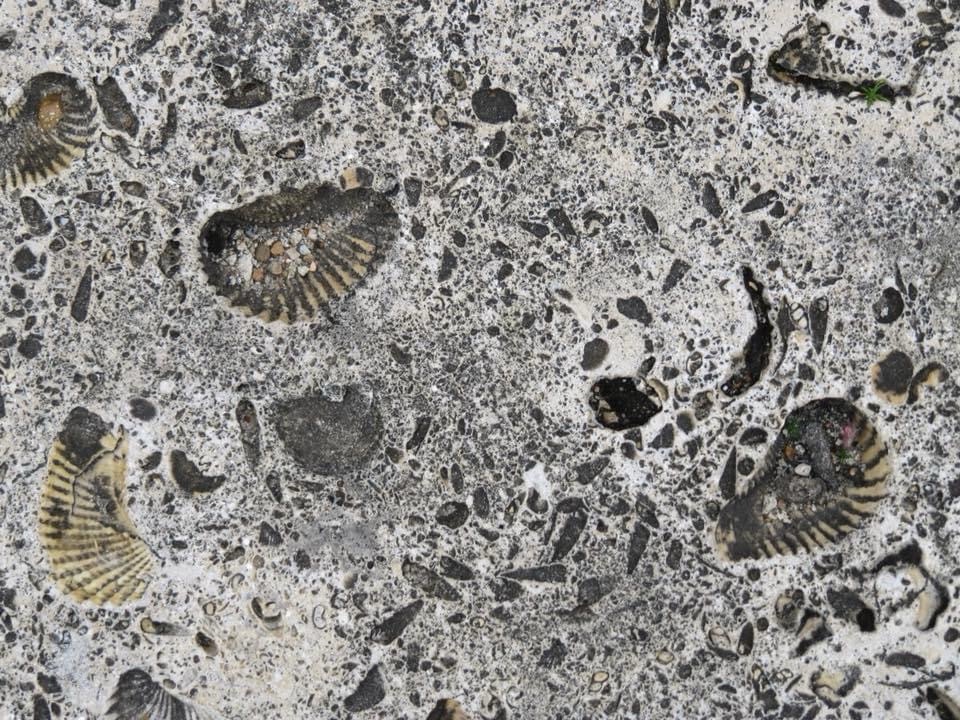
While it was a very unique stone, it tended to turn black in color over time, leaving a less than desirable appearance. (first photo)
There were several quarries west of the Austin area a few decades ago. The most visible quarry a few decades ago was on RM 1431 at Lime Creek Rd, now a part of Anderson Mill Rd, in the unincorporated town of White Stone. It is now a part of the City of Cedar Park. (An aerial shot of that quarry is the last photo below)
There you could see many large blocks of stone that was left after the most desirable blocks were taken to produce the cladding. Now the huge boulders have mostly been broken down and crushed into road base and other aggregates.
I guess this is proof that this area was the sea-bed many years ago.


 Angora Chronicles