
Just thinking about what life was like when Buchanan Dam was being built, with the little beer stands setup along the roads leading from there.
Texas Roadside Beer Stands – Back in the days when Buchanan Dam was being built.
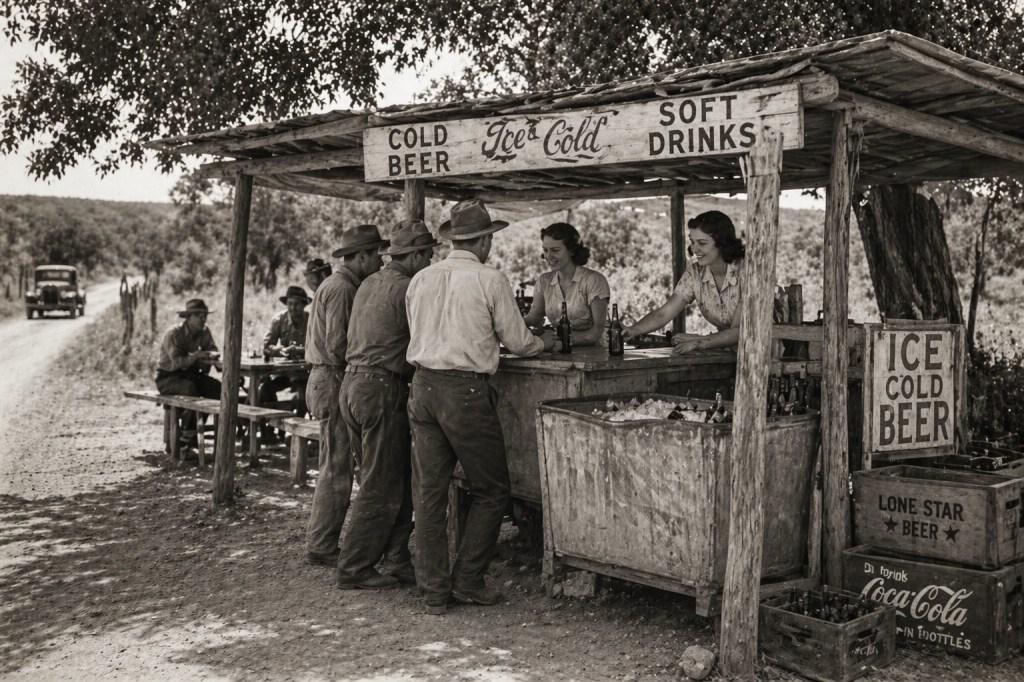
Many operated by young gals, as the young men and older guys were working on the Dam
Tell me about the open air beer stands along the roads when the working men got off work building Buchanan Dam in Texas.
The Song:
https://suno.com/s/k4zELR1wDkKMVXVg
////////////////////////////////////////
What you’re remembering—or asking about—is a very real piece of Hill Country life, and it ties straight into two things happening at once in the early 1930s:
• the building of Buchanan Dam
• and the already-established Texas tradition of the “icehouse”
Put those together, and you get exactly what you’re describing: open-air beer stands strung along the highways and crossroads, catching men when they got off work.
⸻
The setting: a boomtown without calling it one
When construction started in 1931, the dam site wasn’t much more than rough country along the Colorado River. Within a short time, it turned into a temporary working settlement of hundreds of laborers, complete with bunkhouses, tents, and basic services .
These were:
• dam workers
• truck drivers hauling rock and cement
• carpenters, welders, and labor crews
Most of them were:
• young or middle-aged men
• living rough, away from home
• working long, hot shifts in Hill Country heat
When the whistle blew in the evening… they were ready for two things:
shade and cold beer.
Originally, an icehouse wasn’t built for drinking at all.
It was a place that: • made or stored ice
• sold cold goods (meat, soda, beer)
• served as a supply point before refrigeration
But Texans figured something out quick:
If you’ve got ice… you’ve got cold beer.
And once beer started being bottled and stacked on ice, workers naturally began gathering there after work .
⸻
What those roadside beer stands looked like
Around Buchanan Dam—and places like Llano, Bluffton — you would’ve seen:
Simple setups:
• wood-frame sheds or tin-roof lean-tos
• dirt or caliche parking areas
• hand-painted signs: “BEER,” “COLD DRINKS,” maybe “ICE”
Wide open fronts:
• no doors, just open air
• big shade trees (live oak if you were lucky)
• long plank tables and benches
Cooling methods:
• beer stacked in wooden crates
• ice blocks melting in troughs or boxes
• sometimes sawdust insulation to slow the melt
Atmosphere:
• no air conditioning—just breeze and shade
• flies, dust, and laughter all mixed together
• radios later on… but early days, just talk
⸻
The crowd when quitting time hit:
This is where your picture really comes alive.
When the shift ended:
• trucks and flatbeds would roll in
• men still in work clothes—dusty boots, sweat-stained hats
• pay envelopes sometimes still in their pockets
And they’d:
• grab a cold beer straight out of ice water
• lean against a post or sit at rough tables
• swap stories from the job site
• gripe about foremen, weather, or busted equipment
It wasn’t fancy—it was decompression.
⸻
Why they were along the highway
Those stands weren’t random.
They were placed:
• right along the main roads leading to the dam site
• near river crossings or intersections
• where workers had to pass coming and going
That meant steady traffic every evening.
And because the dam project created a temporary population surge, these places popped up fast—some legal, some not so much.
⸻
More than beer—this is important
These icehouses became:
• social hubs (like a front porch for working men)
• informal hiring halls (“you need a hand tomorrow?”)
• rumor mills and storytelling spots
In a place where men were far from home, they were:
part bar, part campfire, part community
⸻
The Hill Country twist
Out around Buchanan Dam, you didn’t get the city-style beer hall.
You got something more like:
• rougher
• quieter
• tied to ranch country and river life
Think:
• cedar posts
• limestone dust
• pickup trucks instead of streetcars
• and men who’d just wrestled rock and concrete all day
⸻
The bottom line:
Those open-air beer stands along the highway weren’t an accident.
They were the natural result of:
• hard labor
• hot Texas weather
• the arrival of ice and bottled beer
• and a sudden concentration of working men with nowhere else to go
They started as icehouses, but in places like Buchanan Dam, they became something more:
a place to cool off, catch your breath, and feel human again after a day of building something big.

